Practical Guide to CCTV System Design for Public Sector Organisations
By Steve Clarke
CCTV systems look simple from the outside. It is easy to think they are just cameras mounted on ceilings recording video.
In reality, modern surveillance systems are much more complex. Cameras are now connected to networks, analytics engines and access control systems. They can analyse behaviour, recognise vehicles and integrate with wider building technology.
This guide explains some of the key considerations when planning a CCTV installation, particularly in public sector environments where reliability, compliance and long-term performance matter.
Choosing the Right Camera Technology
Many people still ask whether CCTV systems should use analogue or IP cameras.
Analogue cameras still exist, although being very obsolete now. These are still produced as spares, only to replace like for like equipment in old systems.
Most modern installations use IP cameras instead. These connect directly to the network or the network video recorder and allow the footage to be processed and analysed digitally.
The camera itself is only part of the decision. A much bigger factor is choosing the correct type of camera for the environment.
During a site survey we assess several things:
- whether dome cameras or fixed cameras are required
- whether PTZ cameras are needed to track movement
- whether wide-angle lenses or long-range optics are more appropriate
- whether the cameras need indoor or outdoor protection (IP rating)
There are thousands of cameras on the market. The challenge is not finding a camera. The challenge is selecting the right one for the job.
CCTV Image Quality: Why Good Systems Still Produce Poor Footage?
People often assume poor CCTV footage is caused by bad cameras. In many cases the real issue is maintenance.
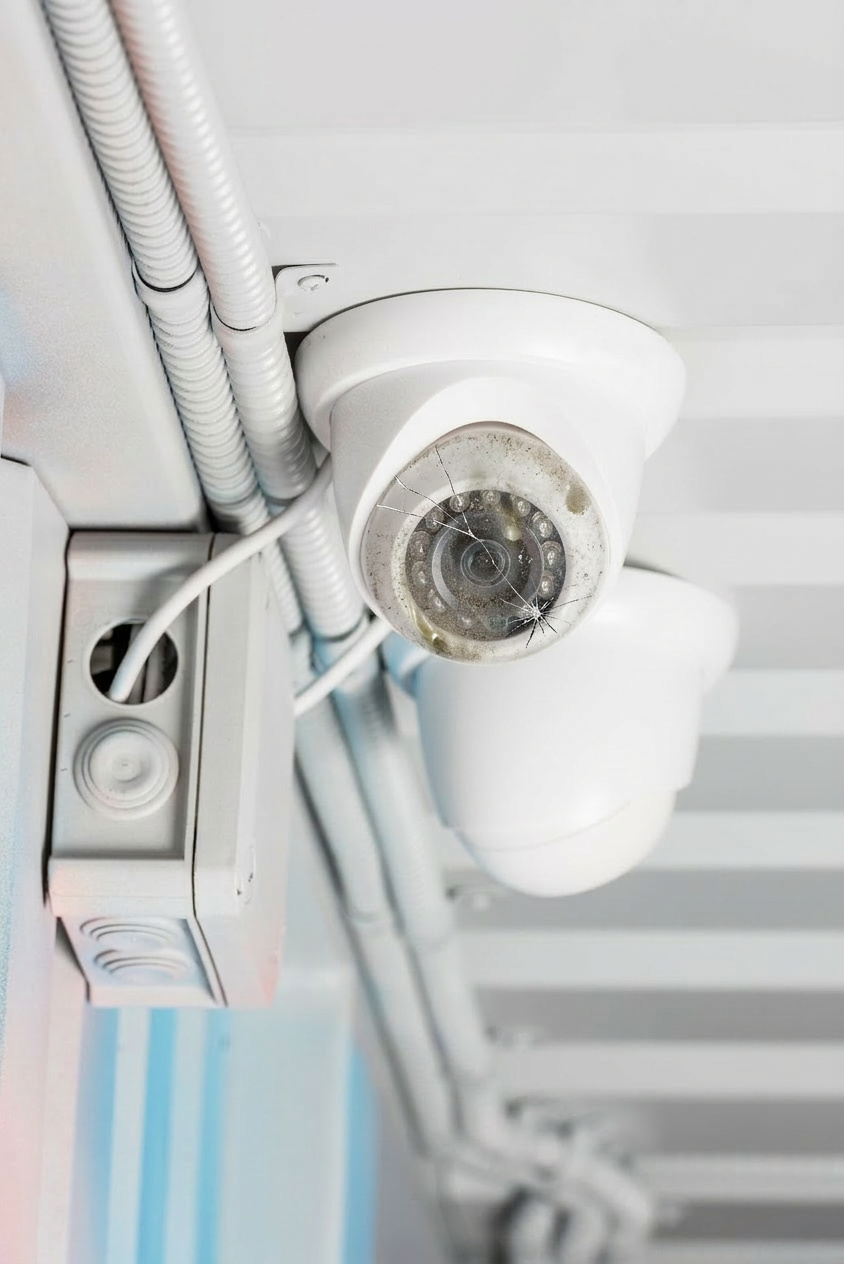
A camera might be installed on a wall or outside a building and then left there for years. Rain, dust and pollution build up on the lens. Over time the image becomes blurred. Even a high-quality camera will produce poor footage if the lens is dirty or damaged.
Another issue is low-cost installations. Many systems are installed without proper planning or maintenance schedules. Cameras are mounted quickly and then forgotten.
Modern digital cameras are actually extremely capable. Image processing has improved dramatically, especially in low-light conditions. Many systems can now produce clear images even at night.
But like any piece of equipment, they still require maintenance.
Designing CCTV Systems for Different Environments
CCTV systems must be designed around the environment they are protecting.
Different locations require different camera types and lens choices.
For example, in retail environments cameras near tills often use wide fisheye lenses. These allow operators to monitor a large area and see interactions between customers and staff.
The trade-off is detail. People further away may appear less clear because wide lenses prioritise coverage over precision.
Entrances and corridors are different. In these locations the priority is identifying individuals. Cameras are positioned to capture faces clearly as people enter a building.
Outdoor environments may require long-range cameras capable of zooming over large distances. In these cases, the quality of the optics becomes extremely important.
When designing a system we evaluate:
- camera angles
- mounting heights
- lighting conditions
- coverage areas
- potential blind spots
The goal is always the same: capture useful footage rather than simply install cameras.
Artificial Intelligence in Modern CCTV Systems
One of the biggest changes in surveillance technology is the introduction of AI.
Traditional CCTV systems simply recorded video. If something happened, someone had to watch the footage afterwards.
Modern systems can analyse what is happening in real time.
For example, cameras can now:
- detect people entering an area
- recognise vehicles and number plates
- analyse behaviour
- track individuals across multiple cameras
- facilitate face and numberplate based entry systems (ANPR)
Vehicle recognition is now widely available. Cameras can automatically read number plates and identify vehicle make, model and colour.
This can be used in practical ways. For example, number plate recognition can automatically open gates for authorised vehicles.
Some systems also use facial recognition or person recognition. A system can assign a digital identity to a person and track them as they move across a site.
This does not always rely on faces. AI systems can model the shape and movement of a person. They analyse body proportions, limb length and walking patterns.
This means a person can still be tracked even if their face is not clearly visible.
Data Protection and Privacy Considerations
With more advanced analytics comes greater responsibility around privacy.
Before GDPR regulations were introduced, it was technically possible to link CCTV data with other personal information. For example, a retail system could potentially connect camera data with customer loyalty accounts.
Today strict data protection rules apply.
Organisations deploying CCTV systems must carefully consider:
- what data is recorded
- how long recordings are stored
- who can access the data
- how the system complies with privacy regulations
Privacy compliance is now a key part of CCTV system design.
How Long CCTV Footage Should Be Stored?
Most organisations use a rolling storage period.
A common recommendation is around 30 days of recorded footage.
This allows enough time for incidents to be investigated while preventing unnecessary long-term storage of personal data.
The police often request CCTV footage following incidents. They may ask businesses or residents in an area to provide recordings covering several weeks.
For this reason, a 30-day storage window is generally considered a practical balance.
Important clips can always be saved separately if required.
Network Infrastructure for CCTV Systems
Modern IP surveillance systems are relatively straightforward to integrate with network infrastructure.
Most cameras use RTSP (Real Time Streaming Protocol). This is a lightweight streaming protocol that has been used in video systems for many years.
Because of this, CCTV systems typically place only moderate demands on network infrastructure.
In most cases the network design is simple compared to other AV or IT systems.
Storage Requirements for CCTV Systems
The amount of storage required depends on several factors:
- number of cameras
- recording resolution
- frame rate
- recording duration
- whether recording is continuous or event-based
As an example, a system with four 4K cameras recording motion events could store roughly two months of footage on a one-terabyte drive.
AI can also help reduce storage requirements.
Instead of storing full video footage, some systems analyse the content and create text descriptions of events. These files are much smaller and can be stored long term while reducing the volume of video that must be kept.
Integrating CCTV with AV and Building Systems
CCTV systems are increasingly integrated with wider building technology.
Cameras can trigger automated responses within a building.
For example:
- turning lights on when someone approaches
- triggering alarms or alerts
- sending notifications to security staff
- playing recorded audio messages
Many cameras now support two-way communication, allowing operators to speak to visitors directly.
Cameras can also integrate with access control systems. Instead of using keycards or codes, authorised individuals can be identified automatically when they approach a door.
In residential or smart building environments, cameras can trigger automation events such as unlocking doors, adjusting heating or activating lighting.
This means CCTV is no longer a standalone security tool. It has become part of the wider ecosystem of building technology.
Why a Proper Site Survey Matters?
Every successful CCTV installation begins with a detailed survey.
During this process engineers determine:
- where cameras should be positioned
- which lenses should be used
- which areas need coverage
- where blind spots may occur
The survey also identifies whether specialised cameras are required.
For example, PTZ cameras (pan-tilt-zoom) can automatically track individuals moving through a space. AI systems can detect suspicious behaviour and instruct the camera to follow a person without human intervention.
Without a proper survey, CCTV systems often end up poorly positioned or ineffective.
Final Thoughts
CCTV systems have evolved far beyond simple video recording.
Modern surveillance combines cameras, networking, AI analytics and building automation.
When designed correctly, these systems provide reliable monitoring, useful operational data and strong security coverage.
But achieving that outcome requires careful planning, correct equipment selection and proper system design.
In other words, it takes more than just putting a camera on the ceiling.